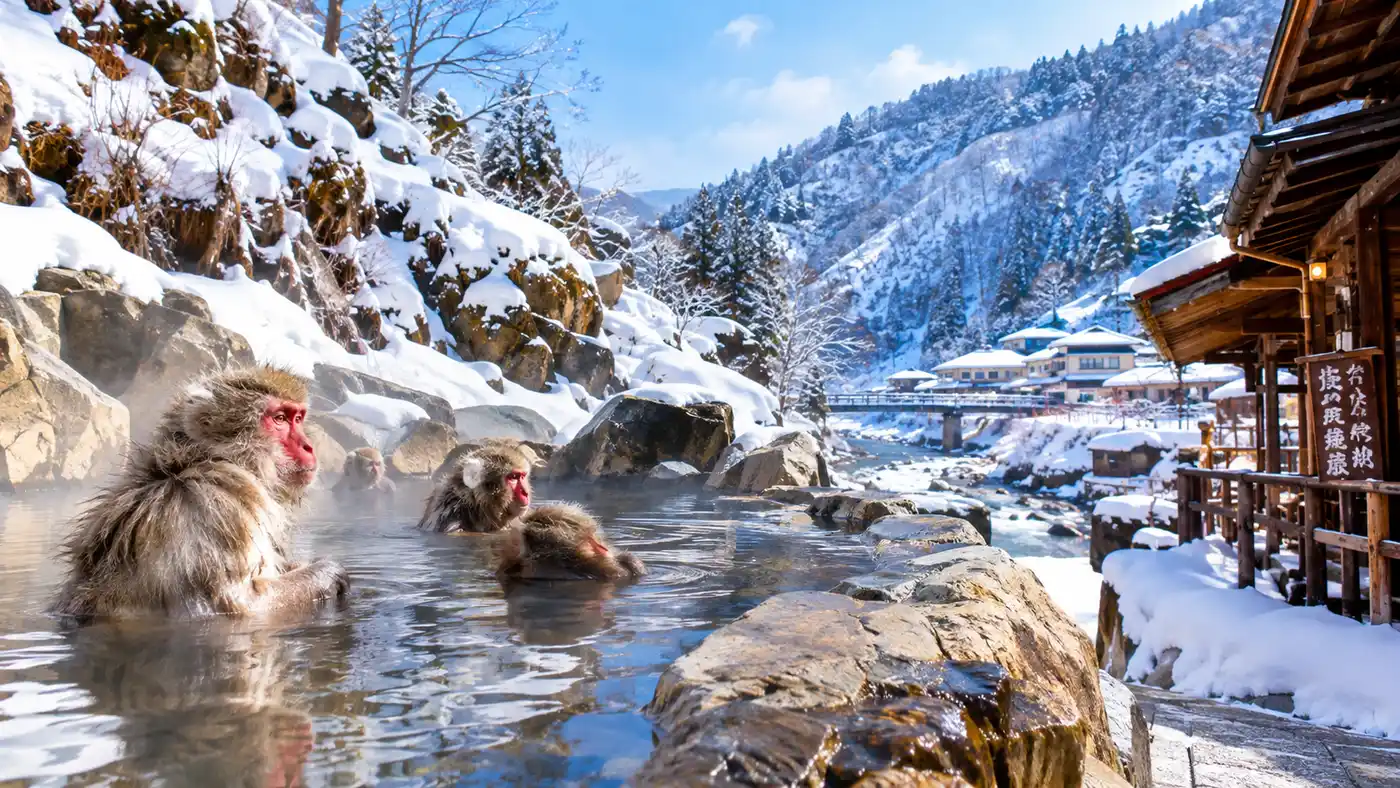
Onsen Near Snow Monkey Park: Jigokudani and Shibu Hot Springs
Your boots will be caked in freezing slush by the time you reach the wooden trailhead gate. Cold air settles deep into the cedar valley here, biting through wool socks and numbing your fingertips within minutes. Watching macaque families soaking in their geothermal pool up the hill looks heavenly, but standing on the wooden viewing deck freezing your limbs off is another matter entirely. Finding a real, steaming onsen near snow monkey park where you can actually strip down and thaw out is the single best decision you will make in Nagano.
The whole district of Yamanouchi machi is practically built on boiling subterranean water. Steam hisses out of storm drains, iron pipes cross alleyways, and old wooden inns smell faintly of mineral sulfur and wet cedar. Whether you want to sleep right across the river from the monkey reserve, wander a historic town wrapped in a yukata robe, or rent a quiet private bath with mountain views, the hot springs in this corner of Nagano Yamanouchi are some of the most atmospheric in all of Japan.
Book your snow monkey park experience:
Jigokudani Onsen Korakukan: Steaming Right in the Valley
There is only one ryokan located directly inside the Hell Valley gorge. Jigokudani Onsen Korakukan was founded in 1864, long before the monkey park ever existed. You pass right past its front entrance along the trail just a couple of minutes before reaching the reserve ticket booth. Heavy steam plumes drift across the Yokobue River, rattling through iron pipes that feed the outdoor baths.
This is the only spot in the world where people sometimes ask if you can bath with monkeys japan style. The answer is complicated. Korakukan has mixed-gender outdoor baths (rotenburo) set right along the riverbank. Long ago, before the protected park was created, wild macaques began slipping into these exact guest baths to survive brutal winter freezes. Today, the reserve up the hill gives them their own dedicated pool, but wild troops do not care about human boundaries. On quiet winter mornings, monkeys occasionally wander down the snowy banks and perch on the rocks of the Korakukan outdoor tub.
Note: While monkeys occasionally visit the Korakukan river bath, entering the water while animals are inside is not sanitary. If a macaque hops into the pool with you, step out quietly onto the deck without sudden movements.
The lodge itself is rustic. Floors creak under thick socks, kerosene heaters rumble in the corners of drafty rooms, and dinner is served on low tables featuring river trout and mountain vegetables pickled by hand. It feels like stepping fifty years back into Japanese mountaineering history. Day-trippers can pay roughly 700 yen to use the hot springs between 12:00 and 15:00, making it an incredible stop on your walk back down the trail.
Staying overnight gives you something rare: utter silence once the last day visitors hike out of the valley at 16:00. The gorge goes completely dark except for the warm yellow lanterns glowing along the wooden eaves.
Shibu Onsen to Snow Monkey Park: Cobblestones, Yukata, and Nine Baths
Down the hill from the Kanbayashi trail entrance sits Shibu Onsen. The town feels like a living museum, crowded along a narrow cobblestone lane running beside the river. Multi-story timber inns lean gently toward each other across the street, their wooden balconies decorated with paper lanterns that flicker to life at dusk.
The distance from Shibu Onsen to Snow Monkey Park is roughly 2.3 kilometers. You can walk it in about 35 minutes if the roads are clear, or take a quick local bus up to the Kanbayashi Onsen bus stop before beginning the trail walk. Many travelers prefer walking up in the morning, spending two hours observing the primates, and then heading down to Shibu for an afternoon of soaking.
The signature experience here is the kyu-to-meguri, or the pilgrimage of the nine public bathhouses. Each bathhouse taps into a slightly different mineral spring with distinct health benefits claimed by local folklore. If you stay overnight at any registered Shibu Onsen ryokan, your host hands you a master brass key that unlocks the wooden doors to all nine baths scattered through the village.
- O-yu (Bath Number Nine): The largest and most famous bathhouse in the village, featuring hot sulfur water, wooden tubs, and an earthen steam sauna built underneath the floorboards.
- Wata-no-yu (Bath Number Six): Known for soft, milky water that local legends claim helps soothe skin conditions and calm tired joints.
- Sasa-no-yu (Bath Number Two): Clear, piping hot mineral water that locals claim stimulates blood flow after long walks in the snow.
- Tenugui Stamping: Purchase a special commemorative cotton towel for around 350 yen and collect ink stamps outside each bathhouse door as proof of your journey.
Walking between baths in winter requires a bit of grit. You slip into your wooden geta sandals, wrap a padded haori jacket over your cotton yukata, and clatter down icy stone lanes while steam rises off your bare shoulders. The water in Shibu is shockingly hot. Locals routinely keep it running at 43 to 45 degrees Celsius. Dip your toes in slowly, or you will be back out on the wooden changing bench in five seconds flat.
Pro tip: Every public bathhouse in Shibu has cold water taps near the pool edges; do not hesitate to run cold water into the tub if the heat is completely unbearable, but turn it off before leaving.
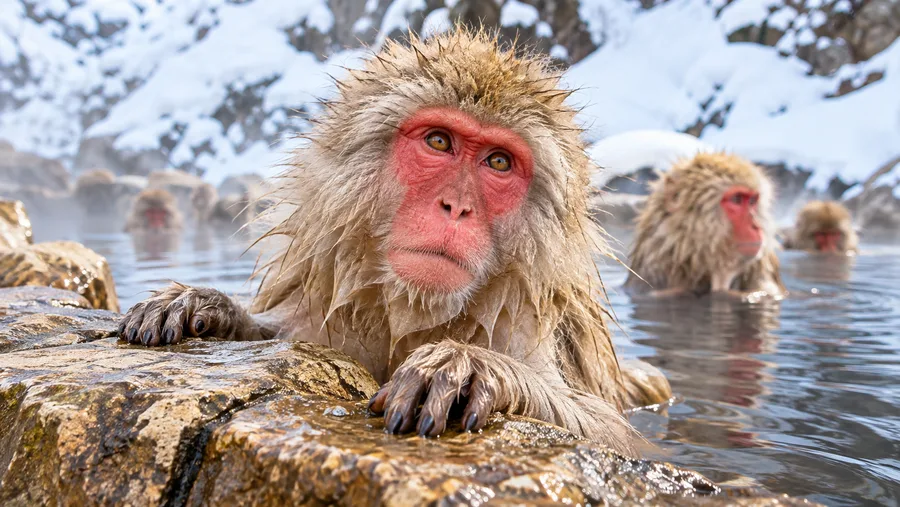
Finding a Private Onsen Near Snow Monkey Park and Yudanaka Options
If stripping down in front of strangers does not appeal to you, finding a private onsen near snow monkey park is surprisingly easy. Most upscale traditional inns throughout Yamanouchi offer private baths (called kashikiri onsen). These can be booked by the hour or simply locked from the inside whenever they sit empty.
Yudanaka sits right below Shibu and serves as the train terminus for the Nagano Dentetsu line. The town feels slightly more modern than Shibu, but its backstreets hold centuries of bathing culture. Many ryokan here feature private wooden tubs overlooking secluded bamboo gardens or snowy rock faces. For travelers visiting Snow Monkey Park, Yudanaka offers practical convenience since you can drop your luggage right beside the station before heading out.
Kanbayashi Onsen is another distinct pocket worth considering. It sits right at the mouth of the monkey park trail. While Shibu is packed together like a dense village, Kanbayashi is quiet, residential, and surrounded by pine woods. Inns here tend to be spread out, offering high-end hospitality and expansive private bathing rooms designed for couples and families.
| Area | Vibe & Style | Walk to Trailhead | Best For |
|---|---|---|---|
| Jigokudani (Korakukan) | Isolated gorge, rustic mountain lodge | 0 minutes (on the trail) | Adventurous travelers, wild river scenery |
| Kanbayashi Onsen | Quiet forest hamlet, upscale ryokan | 3 to 7 minutes | Luxury stays, immediate trail access |
| Shibu Onsen | Historic cobbled lane, wooden geta culture | 25 to 35 minutes | Traditional village charm, nine bath crawl |
| Yudanaka Onsen | Station access, mixed historic and modern | 45 to 50 minutes (or 10-min bus) | Transit convenience, budget ryokan |
Kanbayashi ryokan like Senjukaku feature massive indoor and outdoor baths fed by an enormous volume of clear spring water. If you want pristine private outdoor soaks where snow gently drifts onto cedar rafters without walking through frigid village streets, Kanbayashi is your best bet.
Book your snow monkey park experience:
Things to Do Near Snow Monkey Park: Slopes and Shrines
You probably will not spend your entire vacation sitting in tubs of hot mineral water. Yamanouchi serves as the gateway to some of the highest ski terrain in Honshu. Just 25 minutes up the winding mountain pass via local bus sits Shiga Kogen, a massive ski resort near snow monkey park with 18 connected ski areas operating under a single lift pass.
Skiing deep powder in the morning and soaking your sore legs in Shibu Onsen by late afternoon is one of the premier winter combinations in Japan. The altitude up on Mount Yokote reaches well over 2,300 meters, ensuring consistent, feather-light snow even when lower valleys see sleet or rain.
Cultural day trips from the area are equally rewarding. Taking the train back through Nagano Station allows you to venture up toward the ancient forested approaches of Mount Togakushi. The trip from Togakushi Shrine to snow monkey park takes roughly 2.5 hours using the local bus back through Nagano city, but pairing the two destinations creates an unforgettable winter itinerary. Togakushi is famous for its towering avenues of centuries-old cedar trees half-buried under three meters of snow, alongside handmade soba buckwheat noodles served fresh in chilly mountain shacks.
Back in Yamanouchi, you can spend downtime browsing local sake shops, tasting apple confections made with famous Nagano fruit, or visiting small temple grounds tucked behind the bathhouses of Yudanaka.
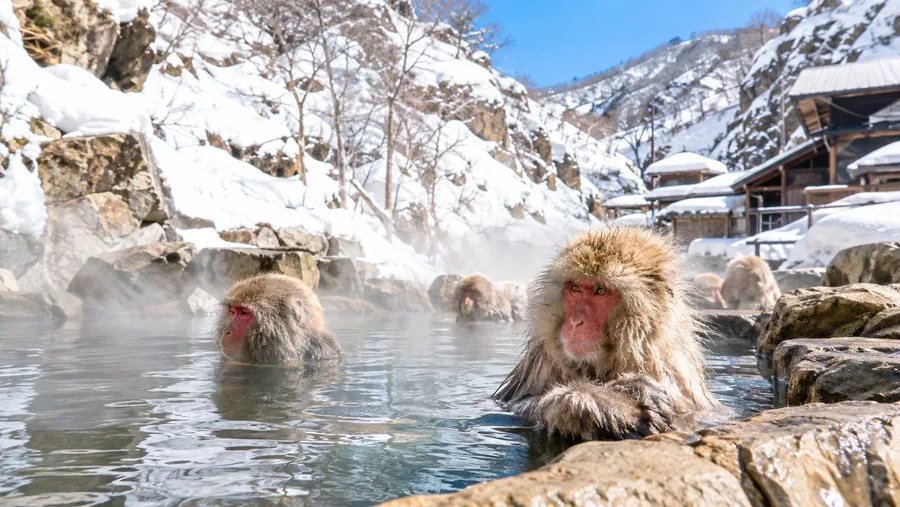
Practical Etiquette and Tips for Your Bath in Nagano Yamanouchi
Bathing in traditional hot springs has a rhythm that can feel intimidating if it is your first time in Japan. The most important thing to remember is that onsen water is strictly for soaking, never for cleaning. You wash and rinse your body completely before your toe ever touches the communal bath.
Tattoos still carry historic stigmas at certain public facilities across Japan. In Shibu Onsen, the nine communal bathhouses are generally unstaffed and unlocked with keys, meaning ink goes largely unmonitored by attendants. However, larger resort hotels may ask guests to cover small tattoos with flesh-colored waterproof bandages. If you have extensive body art, booking a ryokan with a private onsen near snow monkey park completely removes any stress.
- Wash before soaking: Sit on the small plastic stools at the washing stations and scrub thoroughly using soap and shampoo, rinsing away every bit of lather before stepping into the tub.
- Keep your towel dry: Do not let your modest washcloth touch the spring water. Fold it up and place it on your head or set it down along the clean edge of the stone bath.
- Cool down gradually: Do not scrub off the mineral residue when you get out; pat dry with your damp towel so the spring minerals keep your skin warm in the winter air.
- Hydrate immediately: High-mineral water dehydrates you much faster than standard bathwater. Drink a full glass of cold barley tea or water from the dressing room cooler before leaving.
For smooth transit between the towns, review our guide on how to get to Snow Monkey Park so you know bus schedules and train connections ahead of time. Missed buses along the mountain road can mean standing around in sub-zero wind for nearly an hour.
Frequently Asked Questions about onsen near snow monkey park
Can people bath with monkeys japan style in the same hot spring?
No, visitors cannot soak directly inside the main Jigokudani monkey pool for safety and hygiene reasons. However, guests staying at the nearby Jigokudani Onsen Korakukan ryokan sometimes encounter wild monkeys lounging near the rocks of their outdoor river bath.
How do I travel from Shibu Onsen to Snow Monkey Park?
You can walk roughly 2.3 kilometers along the roadway and river path to the Kanbayashi trail entrance in about 35 minutes. Alternatively, hop on a local Nagaden bus from the Shibu Onsen stop up to the Kanbayashi Onsen stop, which takes around 7 minutes, followed by the forest trail walk.
Are tattoos allowed in the public baths near the monkey park?
The nine historic bathhouses in Shibu Onsen are unstaffed and generally open to overnight ryokan guests regardless of tattoos. Larger commercial hotels and public day spas may require you to cover smaller tattoos with waterproof patches, or suggest booking a private bath.
Quick Reference
- Korakukan day-use hours: 12:00 to 15:00
- Shibu public baths: 9 historic communal bathhouses
- Walking distance from Shibu to trail entrance: 2.3 km (35 mins)
- Water temperature in village baths: 42 to 45°C
- Nearest train hub: Yudanaka Station (Nagaden Line)
Book your snow monkey park experience:
Before You Go
There is nothing quite like soaking in burning hot mineral water while snow quietly gathers on the bamboo fence beside your shoulder. Yamanouchi machi gives you front-row access to wild snow monkeys, historic cobblestone streets, and centuries of authentic Japanese bathing culture. Pack a solid pair of slip-resistant boots, give yourself enough time to explore both the trails and the village lanes, and embrace the heat of these incredible mountain springs.
Read more about snow monkey park.